

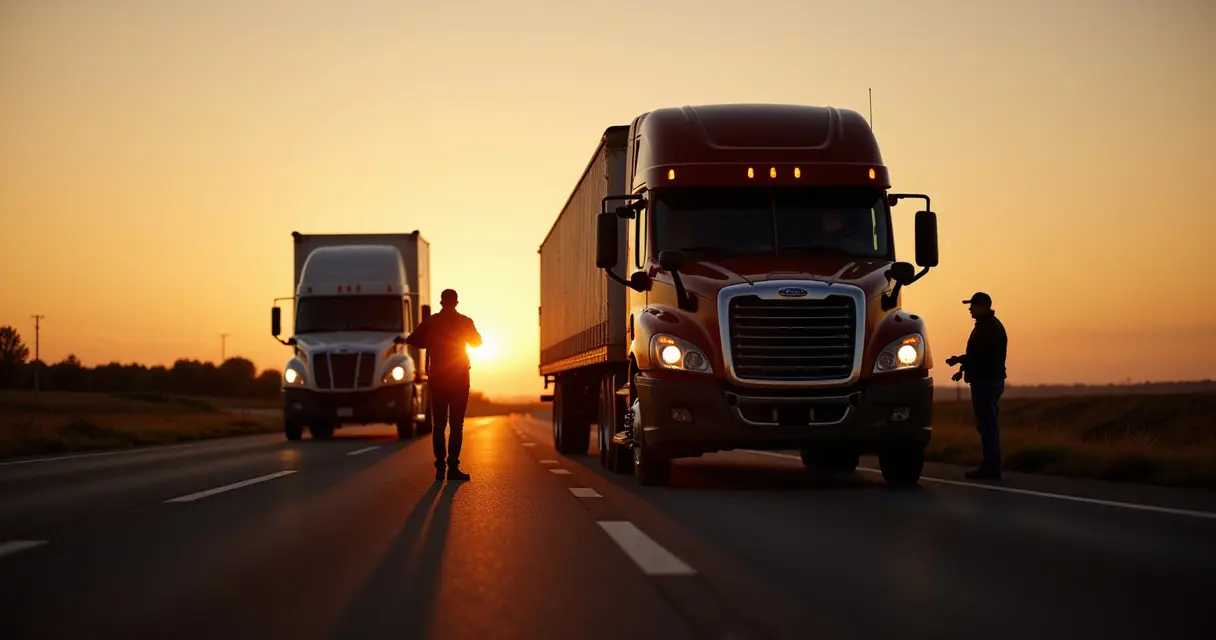
Trucking keeps the whole country running, and carriers are always hiring drivers who hold a commercial license. Truck driver training can begin online, at no cost, before you put a dollar into a CDL school.
The old obstacle was money. A CDL school can cost thousands of dollars, which stopped plenty of people before they ever sat behind the wheel.
That is no longer the case. A free online course lets you study for the permit and learn the basics first, and many carriers now cover your CDL training completely.
This guide is upfront about what a free course can do. It gets you ready for the permit and the road, not the commercial driver license itself, which takes real training and state tests.
Why a truck driving career pays off
The pay is steady and the demand is genuine. Heavy and tractor-trailer truck drivers earned a median wage of 58,640 dollars a year in May 2025, according to the U.S. Bureau of Labor Statistics.
The demand is dependable, with jobs projected to grow about 4 percent through 2035. Freight has to keep moving, so trained drivers stay wanted all across the country.
Best of all, you do not need a degree. Most drivers begin with a high school diploma, go through a truck driving school, and earn the CDL their job calls for.

Pay also rises with experience and specialty. Drivers who handle tanker, hazmat, or oversized loads earn more, and dedicated regional routes can pay well while getting you home more often.
What a truck driver really does
A truck driver moves freight safely from one place to another. The job involves more than steering, and understanding it helps you decide whether trucking suits your life.
A normal day includes a pre-trip inspection, planning the route, driving within the legal hours, and logging your time. You also handle fuel stops, weigh stations, and the paperwork that comes with every load.
Good drivers are careful and dependable. Carriers value a clean record and steady habits much more than speed, since safety is what keeps you on the road and getting paid.
Kinds of trucking jobs and CDL classes
Trucking is a family of jobs, and each one suits a different lifestyle. Knowing them helps you choose the right CDL and the right route.
Over the road and regional
Over the road drivers haul freight across long distances and spend days away, while regional drivers stay nearer to home. Both usually need a Class A CDL.
Local and specialized
Local drivers sleep at home most nights, and specialized work such as tanker, flatbed, or reefer pays more. Construction hauling is another local route, covered in our dump truck and CDL guide.
Class A or Class B
A Class A CDL covers tractor-trailers and opens the most jobs, while a Class B covers straight trucks such as dump trucks and buses. Most trucking careers begin with Class A.
What the CDL actually requires
Here is the honest heart of this job. A free course gets you ready, but to drive for pay you need a commercial driver license, a paid credential issued by the state.
You begin with a commercial learner permit, then complete ELDT training, then pass the CDL skills test. The official rules are on the FMCSA commercial driver license page.
The basic requirements: usually age 21 to drive between states, a DOT medical exam, and a reasonably clean driving record.
The smartest free path: a CDL sponsored by a company
This is the part most people overlook. You do not have to spend thousands on CDL school. Many carriers run paid CDL programs that cover the training and pay you while you learn.
In return, you usually agree to drive for that company for a set period. It is the honest way to get a CDL with little or no money down.
Government workforce programs such as WIOA can also pay for CDL training if you qualify. Use the free online course to get ready, so you pass the permit test on your first attempt.
There are three honest ways to pay for the CDL. A carrier covers it in exchange for a work commitment, a workforce grant pays for it, or you go to a school and pay over time. All three begin with the same free permit prep.
Read every sponsorship contract before you sign it. Fair deals are common, but you want to know how long the commitment lasts and what happens if you leave early.
What "free" really covers, and what it leaves out
Free covers the studying. You can get ready for the permit test and learn trucking basics without spending anything, and you end up with a certificate that shows initiative.
Free does not pay for CDL training, the hours behind the wheel, or the state tests, unless a carrier or WIOA covers them. Those are the real steps toward the license.
How online training works, and where it ends
Online training is helpful for the knowledge side. You study the rules, signs, inspections, and safety, which is exactly what the permit test checks.
Where it ends is the driving. No app can teach your hands to shift gears, back up a trailer, or handle a rig on the highway.
So think of the free course as step one. It prepares you to pass the permit and begin CDL training already knowing the basics.
The skills you need to learn
- Traffic laws, road signs, and safe driving rules
- The pre-trip inspection and basic vehicle systems
- Backing, turning, and the basics of handling a trailer
- Hours of service and the basics of keeping a logbook
- Cargo, weight, and safety on the road
- How the CLP, ELDT, and CDL steps connect
The best free and low cost resources
These are legitimate places to start. The road to a real CDL goes through a registered ELDT school, so look for funded or company paid training.
- Alison: free online driving and safety courses to get ready, with a completion certificate.
- FMCSA: the official CDL rules and the list of registered ELDT training providers.
- CareerOneStop: look up WIOA funded CDL training close to you.
- Company sponsored CDL programs: carriers that cover your training and pay you while you learn.
Does CDL training really cost nothing? An honest look at the costs
| Step | Typical cost |
|---|---|
| Online permit prep and foundations | Free |
| CDL school with ELDT training | Paid, unless a company sponsors it or WIOA funds it |
| Permit and CDL test fees | Low cost, depends on the state |
| DOT medical exam | Low cost, sometimes paid by the employer |
How long until you have your CDL
The free permit prep takes from a few days to a couple of weeks at your own pace. Passing the permit test comes first.
CDL school usually takes a few weeks of full time training, often three to seven weeks. Company programs follow a similar schedule while paying you.
So plenty of people go from starting for free today to working as a licensed, paid driver within a couple of months.
A checklist of requirements before you begin
- Meet the age rule: usually 21 to drive between states, 18 for some jobs within one state
- Hold a regular driver license and a reasonably clean record
- Pass the DOT medical exam
- Get your commercial learner permit before training behind the wheel
- Pick a registered ELDT training provider
Can an online course take the place of CDL training?
No. A free course gets you ready for the permit, but the CDL demands training behind the wheel and a state driving test. No online shortcut leads to the license.
Will employers take your certificate seriously?
As a signal, yes. It shows you prepared. As a replacement for the CDL, no. The CDL is the credential the job legally requires.
The good news is that once you hold the CDL, getting hired is quick, because carriers are always searching for licensed drivers.
Red flags to look out for
- Sites that promise a "CDL" or a "license in days," all online
- Courses that charge you for a CDL they cannot actually issue
- Programs missing from the FMCSA list of registered ELDT providers
- Sponsorship offers with hidden fees or unfair contracts
Tips to start your trucking career on the right foot
- Go through the free course and your state's CDL manual before the permit test
- Ask carriers about paid CDL programs before you spend your own money
- See if you qualify for WIOA funding at a local career center
- Keep your driving record clean, since carriers look at it closely
- Get your DOT medical exam done early so nothing holds you up
Is life on the road a good fit for you?
This part is honest as well. Long haul trucking means time away from home, sometimes for days or weeks, and the work is physically demanding.
If that does not suit your life, local and regional routes keep you closer to home most nights. Many drivers begin over the road, gain experience, then switch to local jobs.
The payoff is real independence and steady pay with no degree and no office. For many people, that trade is exactly what they are after.
Your next steps
Start for free, then earn the CDL. For a construction specialty, read our dump truck guide, and browse every free training path in the high-paying jobs hub.
- Complete a free course and study your state's CDL manual
- Pass the permit test and get your commercial learner permit
- Complete ELDT training through a company program, WIOA, or a school
- Pass the CDL skills test, get hired, and build up safe miles
Frequently asked questions
Can I find a free CDL course?
Free courses get you ready for the permit and the basics. The CDL itself requires ELDT training and state tests, which a carrier or WIOA can pay for.
How much does a truck driver earn?
Heavy and tractor-trailer truck drivers earned a median of 58,640 dollars a year in May 2025, according to the BLS, and specialized work pays more.
Can someone else pay for my CDL?
Often, yes. Many carriers run company sponsored CDL programs that cover the training and pay you while you learn, and WIOA can fund it if you qualify.
How long is CDL training?
CDL school usually lasts three to seven weeks of full time training. Permit prep before that takes from a few days to a couple of weeks.
What does ELDT mean?
ELDT stands for entry level driver training, the federal standard for new CDL drivers. You have to complete it with a provider on the FMCSA registered list.
How is Class A different from Class B?
Class A covers tractor-trailers and opens the most jobs, while Class B covers straight trucks such as dump trucks and buses. Most careers begin with Class A.
Does my driving record need to be clean?
Mostly, yes. Carriers look at your record closely, so a clean history and a passed DOT medical exam make getting hired much easier.
Is an online course enough to get hired?
No. It helps you get ready, but employers require the CDL and, for many jobs, some experience driving safely.
What is the minimum age to drive a truck?
You usually have to be 21 to drive between states, and 18 for some jobs within one state. Age rules can differ, so check your state's requirements.
Can a truck driver be home every night?
Yes, with the right route. Local and dedicated jobs get many drivers home each night, while over the road work keeps you away longer but often pays more.