

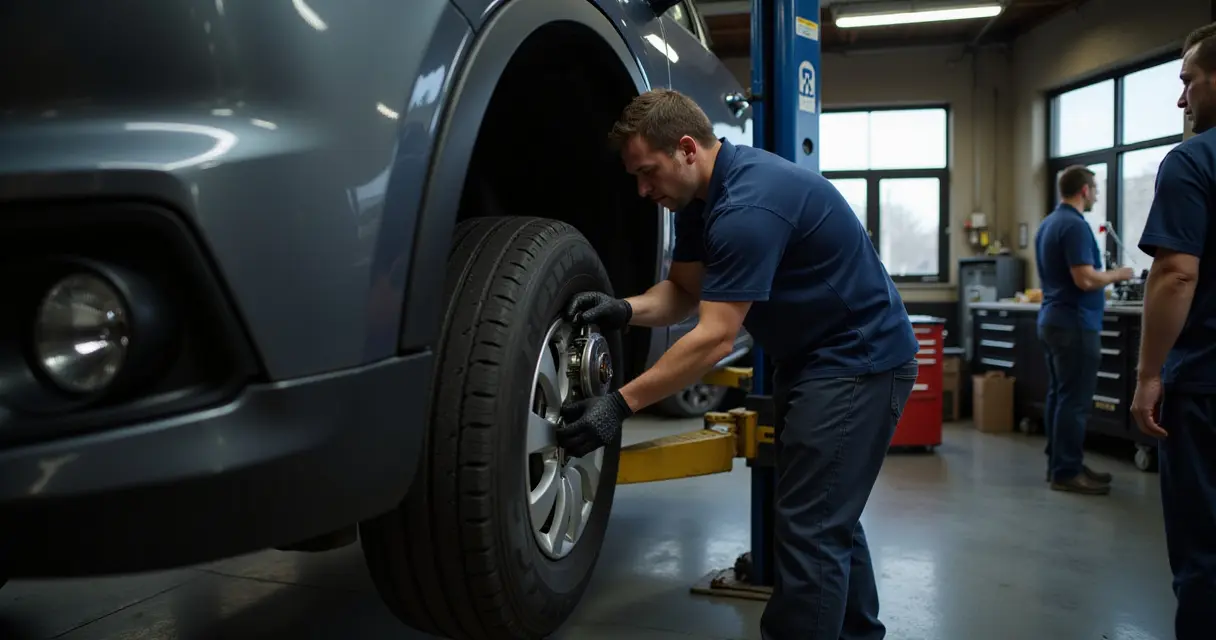
Cars break down in every town, so skilled automotive technicians are always needed. The good news is that automotive mechanic training can begin online, at no cost, before you put a dollar into a course or a school.
The old obstacle was money. Formal mechanic training used to mean paying a trade school up front, long before you earned a paycheck turning wrenches.
That is no longer the case. A free online course lets you pick up engines, brakes, and diagnostics first, then carry that head start into real, hands-on shop training.
This guide is upfront about what a free course can do. It gives you solid foundations and a certificate of completion, not the ASE certification and shop experience that employers really pay for.
Begin a free automotive mechanic course
Why automotive mechanic training pays off
Pay is a good reason to get started. Automotive service technicians and mechanics earned a median wage of 49,670 dollars a year in May 2024, according to the U.S. Bureau of Labor Statistics.
Specialties earn more. Diesel technicians reached a median of 60,640 dollars, and those who master diagnostics or electric and hybrid systems also earn more than the base.
The demand holds steady, with jobs projected to grow about 4 percent through 2034. Cars keep getting more complicated, so trained technicians keep their value.


Best of all, you do not need a degree to work as a mechanic. Most technicians begin with a high school diploma and grow through training, an apprenticeship, or time spent in a shop.
Where mechanics work and which specialties pay best
Automotive technicians work at dealerships, independent repair shops, fleets, and franchises. That variety keeps the trade stable year after year.
Pay rises with specialty and skill. Diesel, transmission, and electrical and electronic work pay more than general repair, and diagnostic experts are always wanted.
Electric and hybrid vehicles are the fastest growing part of the trade. Technicians who train for EV systems early are lining up some of the best paid work ahead.
Kinds of automotive work you can train for
Auto repair is really several skills under the same roof. Choosing a focus helps you aim both your training and your job search.
Engines and transmissions
Engine and transmission work sits at the heart of the trade. It rewards patience, tidy habits, and a firm grasp of how the whole drivetrain connects.
Brakes and suspension
Brake and suspension jobs are steady, day to day work. They are a common way in, where a new technician builds up speed and confidence.
Diagnostics with the OBD scanner
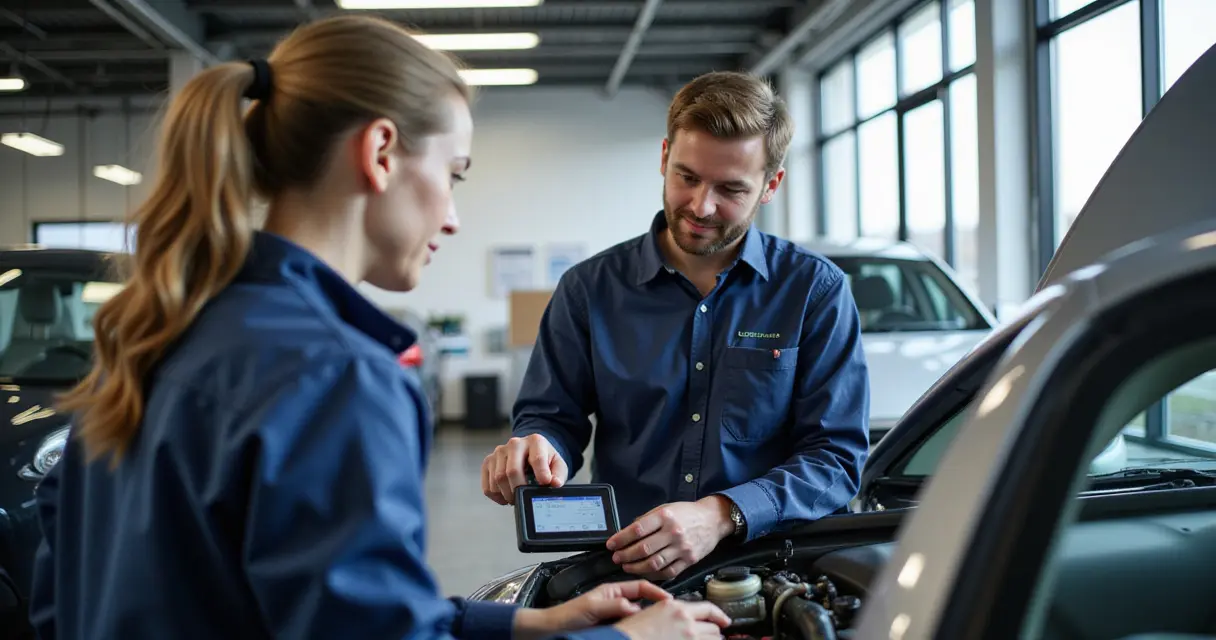
Diagnostics is where modern repair happens. Reading an OBD scanner, following fault codes, and finding the actual problem is a skill that lifts your pay quickly.
Electrical, electronic, and EV systems
Automotive electrical and electronic work is one of the ASE specialty areas, and it is growing quickly with electric and hybrid cars. Our automotive electrician guide covers that route.
What certification actually requires: ASE
This is the part the "get certified online" ads leave out. A completion certificate shows you studied. The credential employers really value is ASE certification.
ASE certifies specialty areas such as engine repair, brakes, automatic transmission, and electrical and electronic systems. You earn them as your experience grows.
So the honest route is straightforward. Learn the foundations for free, get hands-on experience, then earn ASE in your specialty to unlock higher pay.
What "free" really covers, and what it leaves out
Free covers the knowledge. You can learn how engines, brakes, and diagnostics work without spending anything, and you end up with a certificate that shows initiative.
Free does not pay for the hands-on hours, the ASE exams, or your tools. Technicians usually buy their own tools over time, so it is honest to plan for that from day one.
How online mechanic training works, and where it ends
Online training is truly helpful for the parts that live in your head. You study systems, parts, diagnostic theory, and safety before you ever pick up a wrench.
Where it ends is the hands-on work. No app can teach your hands to feel a stripped bolt, read a running engine, or run a real diagnostic on the car in front of you.
So think of the free course as the first step of your training. It prepares you to walk into a shop or a program already knowing the vocabulary and the safety rules.
The skills you need to learn
- Engine, transmission, and drivetrain fundamentals
- Brake, steering, and suspension systems
- Automotive electrical and electronic systems
- Troubleshooting with an OBD scanner and fault codes
- Shop safety, tools, and tidy work habits
- How ASE certification and its specialty areas work
Shop safety rules every technician needs
Safety is what employers care about most, and it is where a free course pays off early. Good habits protect you, the customer's car, and the shop.
- Use the lift properly and check the lifting points every time
- Wear eye protection and gloves around chemicals and hot parts
- Follow the right procedures when handling fuel, oil, and batteries
- Keep the bay tidy so tools and spills do not cause accidents
- Stick to OSHA-aligned safety practices every time
The best free and low cost resources
These are legitimate places to start mechanic training. The ones that lead to a real job are usually in person and funded, not a quick online badge.
- Alison: free online automotive courses that come with a completion certificate.
- ASE: the certification employers value, with an exam for each specialty area.
- CareerOneStop: look up local, WIOA funded hands-on training and apprenticeships.
- Community colleges and dealer or manufacturer programs: paid, hands-on training on real cars.
Many technicians also pick up welding and fabrication for exhaust work, auto body, and custom jobs. A free welding course fits well alongside mechanic training and broadens the work you can accept. Take a look at our free welding course guide.
Does mechanic training really cost nothing? An honest look at the costs
| Step | Typical cost |
|---|---|
| Online foundations course | Free |
| Hands-on training at a school or college | Paid, unless WIOA or an employer covers it |
| ASE certification exams | Paid, for each specialty area |
| Your own tools | Paid, bought little by little |
| Apprenticeship route | You get paid while you train |
How long until you can work as a mechanic
The free online foundations take a few days to a few weeks at your own pace. That part depends only on how quickly you work through the course.
Hands-on training takes longer. A trade program can last from several months to two years, while an apprenticeship builds your skill over a few years as you earn.
ASE certification also requires real work experience before you can certify. The honest lesson is that you can start for free today, but a paid career is a journey.
The smartest free path: an apprenticeship
If you want real training with no debt, an apprenticeship or a dealer program is the best option. You learn on real cars and get paid while your skill grows.
You come out with real hours and a clear road to ASE certification. Government workforce programs such as WIOA can also pay for training if you qualify.
Use the free online course to get ready for the interview and the entry test. Showing up with the basics already learned makes you a stronger candidate.
Growing your skills and your pay
Once you have general repair down, adding a specialty increases your value. The best paid routes are diesel, automotive electrical and EV work, and earning ASE certification.
Some technicians also learn welding for auto body and exhaust jobs. Every new skill you add opens up more of the repair market.
Can an online course take the place of hands-on training?
No, and any site that claims it can is trying to sell you something. The classroom portion can happen online, but the wrench portion cannot. Real hours on real cars are a must.
Will employers take your certificate seriously?
As a signal, yes. A completion certificate shows initiative and that you know the basics before your first day.
As a replacement, no. It does not take the place of the hands-on hours, your tools, or the ASE certification that unlocks higher pay.
Red flags to look out for
- Sites that promise "ASE certification in days," all online
- Courses that charge you for a credential they cannot actually issue
- Pages that never bring up hands-on work, tools, or real experience
- Badges that say "certified" when all they mean is "watched the video"
Tips to start your mechanic career on the right foot
- Complete the free course and keep your certificate to show initiative
- Ask shops about lube tech or helper roles to get your foot in the door
- Get a basic tool set and add to it as you learn
- Go for your first ASE certification as soon as you are eligible
- Accept safety training every time it is offered
Your next steps
Start for free, then follow the honest path. Browse every free training path in the high-paying jobs hub, and choose the specialty that suits you.
- Complete a free automotive mechanic course to learn the basics
- Get hands-on training through a shop, a college, or an apprenticeship
- Gain experience and buy your tools little by little
- Earn ASE certification in your specialty to raise your pay
Is this a good moment to become a mechanic?
Yes, and the reason is straightforward. Cars grow more complex every year, so shops need technicians who understand modern systems and diagnostics.
At the same time, many veteran mechanics are retiring, which frees up spots for trained newcomers. Starting for free today puts you ahead of that wave.
What to expect at your first shop job
Your first months are about showing you are dependable and safe. Expect to begin with oil changes, tires, and brakes while you get to know the shop and its tools.
A good lead technician will review your work and teach you diagnostics along the way. The theory from your free course comes into play right away, so finishing it pays off.
Arrive on time, keep your work area clean, and ask questions whenever you are unsure. That kind of reputation, plus your first ASE certification, is what turns a helper job into a real career.
Frequently asked questions
Can I find a free automotive mechanic course that gives a certificate?
Yes. Sites such as Alison offer free online courses that cover the foundations and give a certificate of completion. Hands-on training and ASE are separate steps.
Does a free certificate count as ASE certification?
No. A free course gives a certificate of completion. ASE certification means passing an exam and having real work experience, and it is what employers value most.
How much does an automotive mechanic earn?
Automotive service technicians earned a median of 49,670 dollars a year in May 2024, according to the BLS. Diesel and specialty work pay more.
Do I have to buy my own tools?
Usually, yes, over time. Most shops expect technicians to put together their own tool set, though you can begin with the basics and add more along the way.
How long is mechanic training?
The online foundations take anywhere from days to weeks. Hands-on training lasts from several months to two years, and ASE also requires work experience.
What specialty earns the most?
Diesel technicians have a higher median at 60,640 dollars, and electric and hybrid work is growing fast. Diagnostic experts also earn better pay.
Is there a way to get mechanic training without paying?
For the foundations, yes. Hands-on training can be free as well through WIOA funding or a paid apprenticeship, if you qualify.
Is an online course enough to get hired?
It helps as a signal, but most employers want hands-on skill and progress toward ASE certification before they hire.