

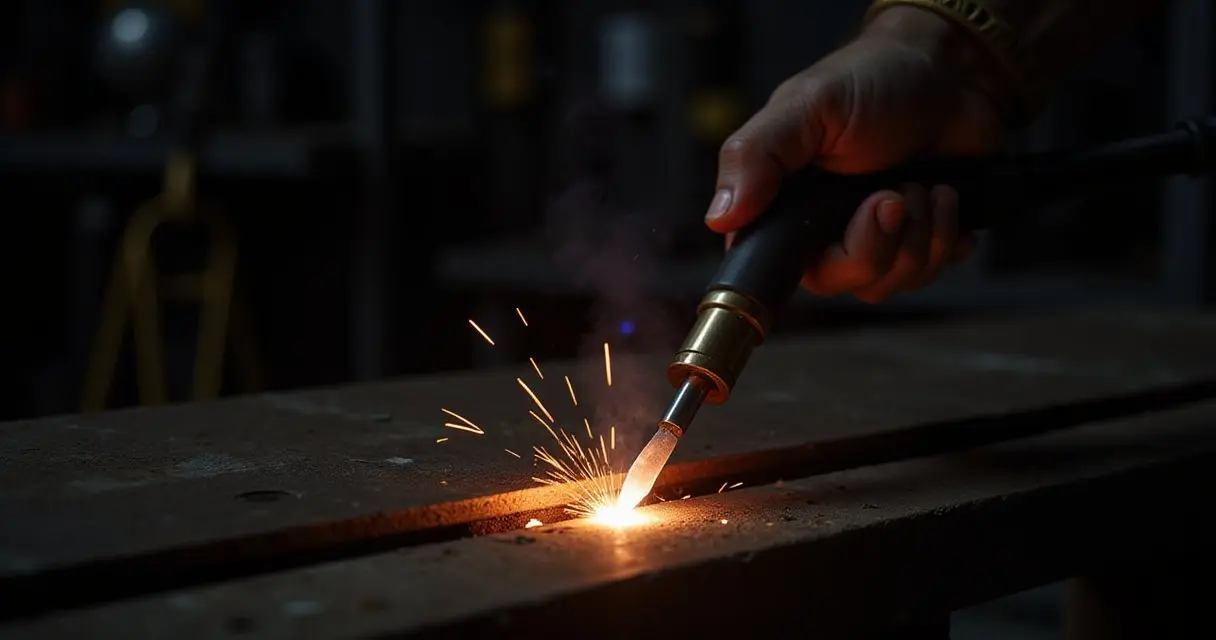
Few skilled trades are hiring as steadily as welding right now.
Factories, shipyards, pipeline crews, and construction sites all need people who can join metal, and many will bring you on quickly if you arrive ready to work.
The pay is solid for a job with no college degree required, and the skill goes with you from one employer and one state to the next.
Start learning to weld today
Free, self paced, and you finish with a real certificate of completion.
The old barrier was money. Welding school could cost thousands of dollars before you ever struck your first arc.
That first step costs much less today. You can study the theory, safety, and fundamentals online for free, whenever it fits your schedule.
In this guide we explain what welding certification really means, the best free courses to start with now, and the honest route from a free course to a paying job.
Why welding is a career worth starting
Welding is one of the quickest ways into skilled trade work without a degree.


According to the Bureau of Labor Statistics, the median welder makes about $51,000 a year, while the top ten percent make more than $75,000.
Starting pay is lower, but it rises fast as you add processes and certifications.
The demand has a simple explanation. The trade is not exploding, but thousands of welders retire every single year.
The BLS projects around 45,000 welding openings a year over the next decade, most of them to replace workers rather than from growth.
So there is real, steady room for new welders, even if the headline growth rate looks small.
Specialty work pays even more. Traveling, pipeline, and underwater welders often make well over the median.
Those jobs are the exception, not where you start, so use the median as the honest number to expect at first.
Where welders work and which welding jobs pay best
Welding is not a single job. It is a skill used in a dozen industries, and the setting decides a lot of the pay.
Most new welders begin in manufacturing or fabrication shops, building everything from trailers to structural steel.
Construction crews need welders for buildings, bridges, and heavy steel, often with better pay and regular overtime.
The highest pay is in the tougher fields. Welders in pipelines, shipyards, aerospace, and underwater work are paid far above the median.
Those jobs require more skill, more certifications, and sometimes travel or hard conditions in exchange for the money.
The honest plan is straightforward. Start in a shop, build clean technique, then move toward the specialty that pays what you are after.
What welding certification really requires
This is where most people get mixed up, so here is the honest picture.
A free online course gives you a certificate of completion, which shows you studied the theory.
That is different from a professional welding certification, which is what employers actually test you on.
The best known is the AWS Certified Welder credential, issued by the American Welding Society.
The test usually takes a few hours and is done in person, on real metal, judged against AWS code.
No app or video can give you that credential. The skill has to be in your hands, in the room.
How online welding training works, and where it ends
An online welding course covers the part a screen can actually teach.
You go through short lessons on processes, safety, metallurgy, and reading blueprints and weld symbols.
Most platforms save your progress, so you can study on a break or a few nights a week.
At the end you receive a certificate of completion, a nice addition to your resume.
What it cannot do is train your hands. A clean bead only comes with a torch, hours of practice, and patience.
So think of the free course as step one, the foundation, not the finish line.
What a free welding course teaches
A good online welding course covers what you need to know before you ever pick up a torch. Expect lessons on:
- The main processes: MIG (GMAW), TIG (GTAW), stick (SMAW), and flux core (FCAW)
- Shop safety, protective gear, and fume and fire hazards
- Basic metallurgy and how different metals react to heat
- Reading blueprints, weld symbols, and joint types
- Inspection basics and how to recognize common weld defects
Arriving with this knowledge means your hands on time goes into getting better, not into learning the basics from zero.
Which welding process to learn first
There are four main processes, and you do not need all of them on your first day.
MIG (GMAW) is the easiest to learn and the most common in shops, so most beginners start with it.
It is forgiving and quick, and you will find it everywhere from auto repair to general manufacturing.
Stick (SMAW) comes next. It is tough and dependable outdoors and on construction sites, even in wind and on rusty metal.
TIG (GTAW) is the hardest to master and the cleanest, the choice for thin metal, stainless, and aluminum when the weld must look flawless.
Learn MIG first to build confidence, then add stick and TIG when the jobs you want start asking for them.
The best free and low cost welding courses
Every option below is real, and we say plainly what is free and what costs money.
None of them makes you a certified professional welder. They cover only the theory and the fundamentals.
| Platform | Cost | Format | Best for |
|---|---|---|---|
| Alison | Free | Web course | A free, respected course with a completion certificate |
| Cursa | Free | App + web | A free course with a clearly free certificate |
| SkillCat | Free basics | App + sims | Mobile lessons focused on welding safety |
| Lincoln Electric | Free | Videos / academy | Manufacturer training from a trusted welding brand |
| AWS Learning | Paid (~$350) | Self paced + exam | An official AWS certificate and CEUs |
If you want a single place to begin, Alison's welding course is free, well known, and ends with a certificate.
How long it takes and how much it costs
The online theory is the quick, cheap part. At your own pace, most free courses take from a few hours to two weeks.
Real skill takes longer. A focused welding certificate program usually lasts three months to a year.
Costs divide the same way. The theory can be free, but the hands on training and the testing are where the money goes.
The AWS Certified Welder application costs about $75, plus a small fee every six months to keep it active.
At a testing facility, the weld test itself usually runs $300 to $450, depending on the position and process.
If your budget is tight, look at the free paths first. Veterans and young adults can often train for free through programs like Job Corps.
Can a welding course online replace training in person?
No, and this is the part most beginners overlook.
Real welding is a physical skill, judged by the quality of the weld itself.
You build it at a community college, a trade school, an apprenticeship, or on the job in a shop.
The free course makes learning faster and shows employers you took initiative. It does not replace time with a torch.
Do employers accept an online welding certificate?
It depends on what you expect it to do.
As proof that you understand the fundamentals and took the first step on your own, yes, it helps your application.
As a stand in for a weld test, no. A shop will still want to see you weld.
Used honestly, it works like this. Study for free, learn the vocabulary and safety, then prove the skill in person.
When a job calls for a specific certification, plan to take the AWS Certified Welder test at an approved facility.
Warning signs to avoid
Because free welding certificates are a popular search, they also attract some bad actors.
Be careful with any site that promises an instant welding certificate with no course and no test.
Be suspicious of pages suggesting an online course is the same as an AWS certification or a license to weld.
And skip anything charging a large upfront fee for a certificate no employer recognizes.
The legitimate platforms are clear that they cover fundamentals only, and that honesty is the sign you want to see.
What to do next
Starting in welding no longer begins with a big tuition bill.
Choose one of the free courses above and finish the theory this week.
Next, get real time on a machine through a local class, an apprenticeship, or an entry level job in a shop.
When you feel ready, book a weld test or the AWS Certified Welder exam to make it official.
Step by honest step, that is how curiosity turns into a paid welding job.
Frequently asked questions
Can I earn a welding certificate online for free?
Yes. Alison and Cursa both have free welding courses that end with a free certificate of completion. Keep in mind that a completion certificate shows you studied the theory; by itself it is not a professional welding certification.
Can an online course alone make me a welder?
No. Online courses cover theory and safety, but welding is a hands on skill. Before an employer hires you, you need real practice and, for most jobs, a passed weld test.
How much does a welder earn in the US?
The median welder earns about $51,000 a year, with the lowest tenth under $38,000 and the top tenth over $75,000, according to the Bureau of Labor Statistics. Pipeline and specialty welders make more.
Can I take the AWS Certified Welder test online?
No. The skills test is hands on and done in person at an AWS Accredited Testing Facility, where you weld in set positions and processes judged against AWS code.
How long does welding certification take?
The online theory takes a few hours to a few weeks at your own pace. Developing the skill and passing a weld test usually means months of steady practice.
Will employers accept an online welding certificate?
As a foundation and proof of initiative, yes. As a substitute for a weld test, no. Most shops still want to see you weld before they hire you.
Do I need a high school diploma to start welding?
Not for a free online course. Some trade schools, apprenticeships, and employers may require one, so check the rules of the program you pick.